Back to bulletin

Yuanhao Geng
Restoring an Early Spinet, with Notes on the Roland C20 and C30
Our research fellow Yuanhao Geng restores an early spinet and shares his experience with the Roland C20 and C30.
Our research fellow Yuanhao Geng restores an early spinet and shares his experience with the Roland C20 and C30.
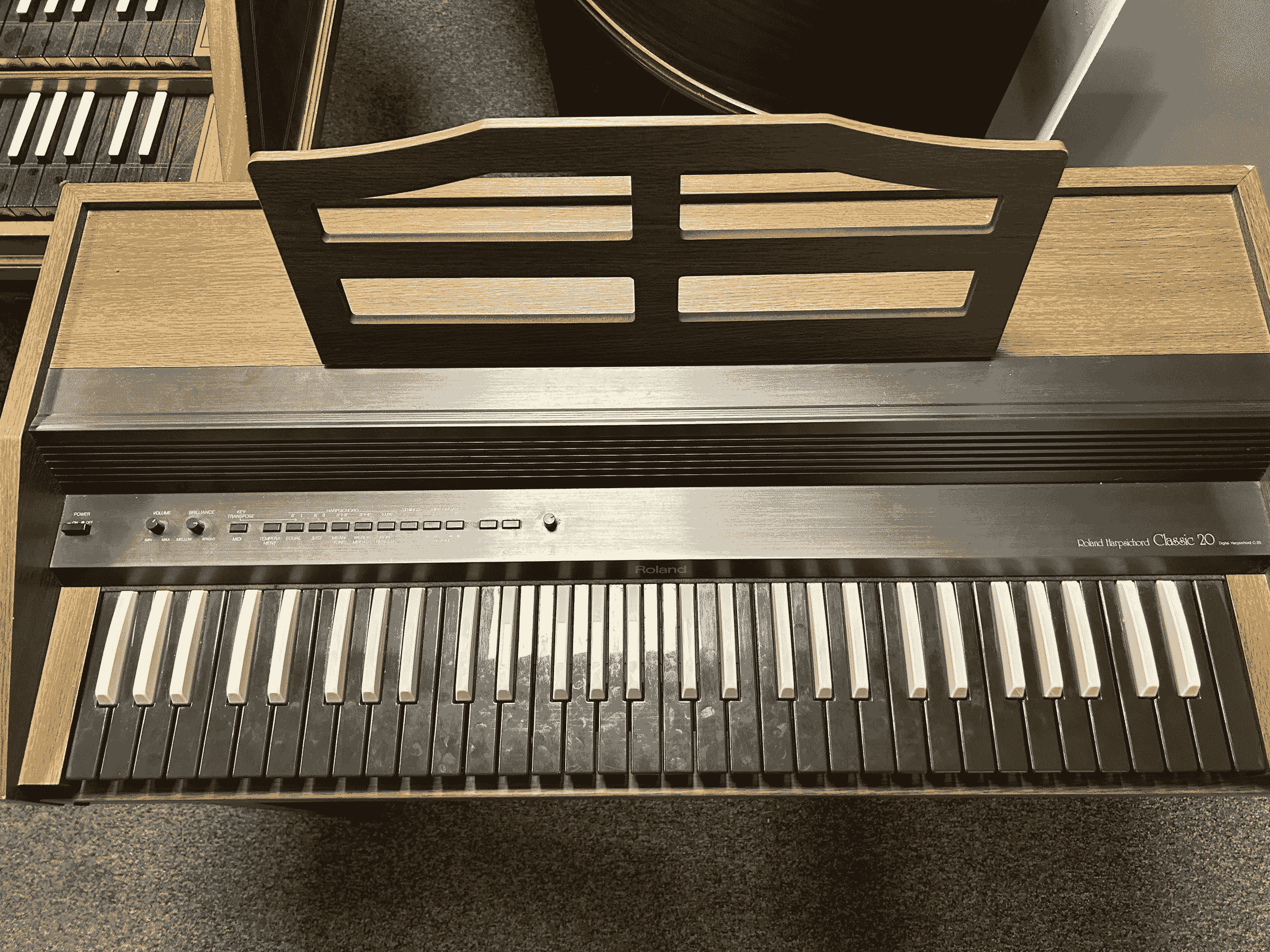
Our research fellow Yuanhao Geng is currently studying computer science at the University of Wisconsin–Madison. Although his formal background lies in engineering, he has been deeply drawn to Baroque music since childhood and has never set aside his attention to — and practice on — historical instruments. Beyond his coursework, he has long collected and organized materials and objects from the early-music revival, and has travelled to several museums in the United States and Canada to gather drawings and documents for study. In the area of digital harpsichords, his first acquisition was a Roland C20. According to Roland's own documentation, the C20 belongs to an earlier generation of digital harpsichords: it provides several harpsichord voices together with lute, string and organ tones, along with digital reverb and similar features. It is well suited to an initial exploration of timbral style, but its limitations are also clear — the emphasis is on simulating the sound, and it is harder for it to offer a touch sufficiently close to that of a historical instrument.
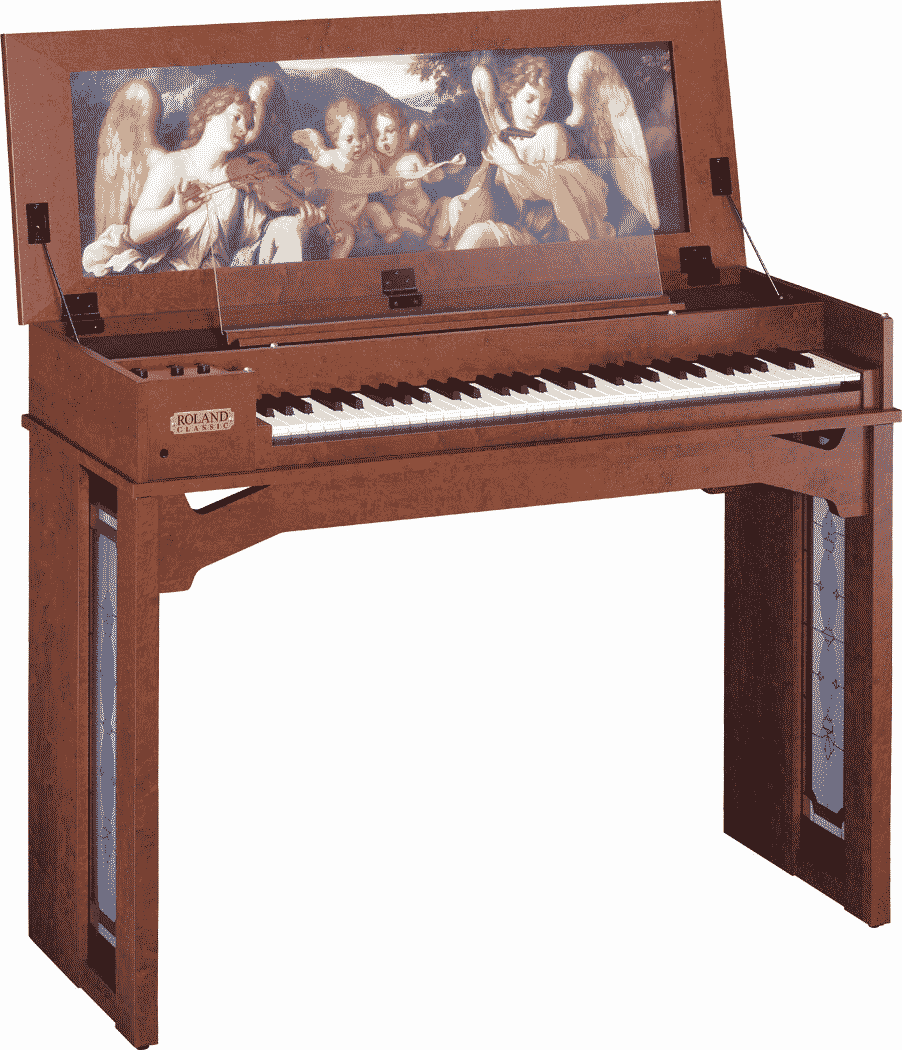
Later, Geng acquired a Roland C30. By comparison, the C30 represents a clear step forward: Roland positions it officially as a digital harpsichord, built around a 61-key "click action" F-scale keyboard specifically designed to emulate harpsichord-like touch. It offers four voice groups — French, Flemish, Fortepiano and Dynamic Harpsichord — together with 8'I, 8'II, 4' and lute variations, two positive-organ voices, Baroque pitch, and a selection of historical temperaments, along with built-in speakers, headphone practice, and a degree of portability. For him, the C30 comes closer than the C20 not only to the sound of the harpsichord but also to its feel under the hand, making it a more realistic compromise between touch, practice, ensemble use, and mobility.
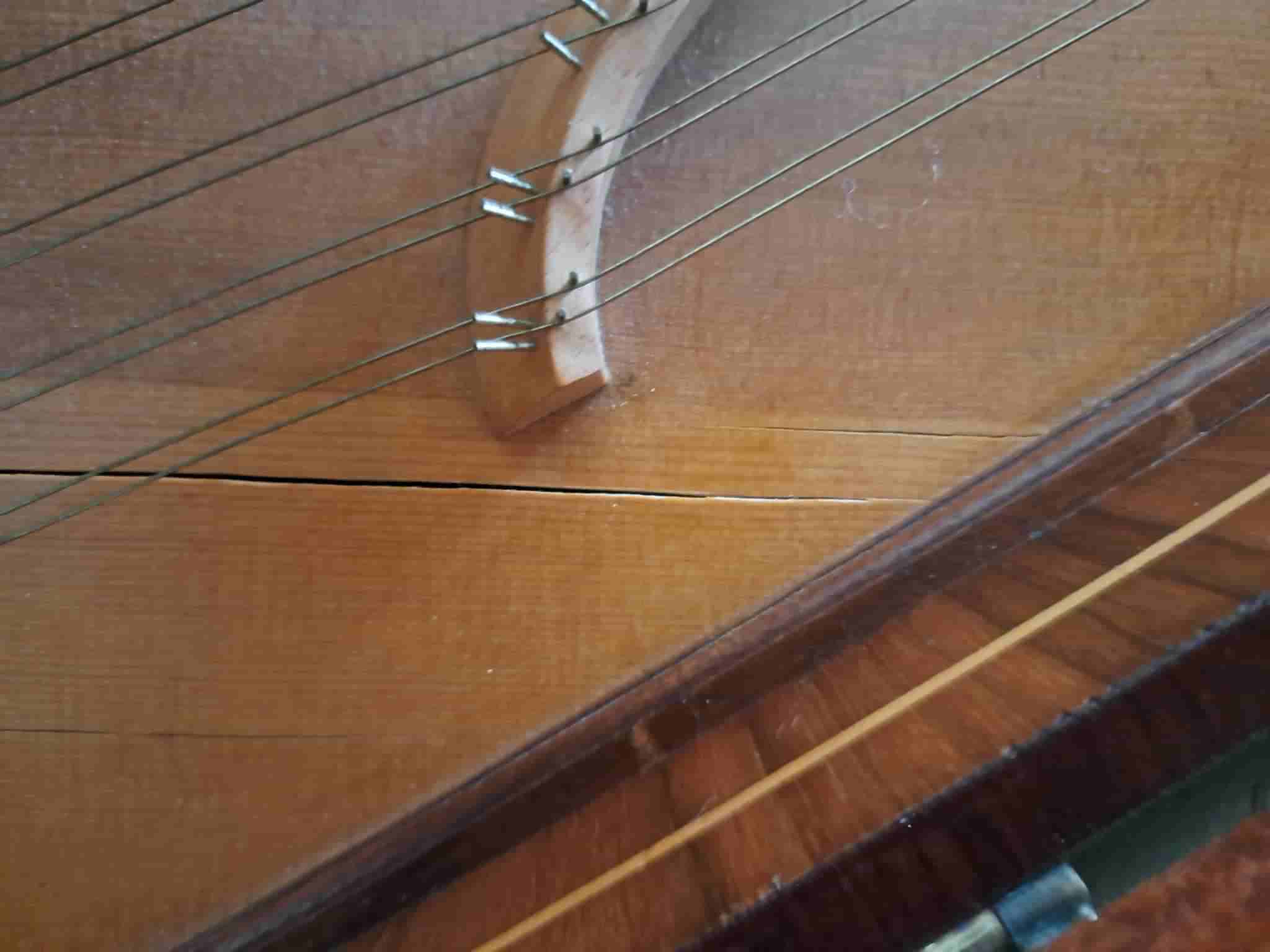
Cracks in a harpsichord soundboard are most often caused by long-term shrinkage of the wood as it loses moisture. Fine cracks do not necessarily have an immediate impact on the sound, but once they widen, or are accompanied by loosening or abnormal structural stress, restoration is usually required. A common approach is first to clean and correct the edges of the crack, then to fit a matching strip or thin sliver of wood into the gap so that it closes cleanly and the soundboard regains its integrity, followed by surface leveling and any necessary subsequent adjustments. The essential point is not "simply filling a gap," but respecting as far as possible the original character of the wood, the structure, and the acoustic state — so that the soundboard recovers stability and usability while its historical material is preserved.